Introduction: Is Managing Global Payroll Really That Simple?
Global hiring has become easier than ever — but managing payroll across different countries is still one of the most complicated parts of scaling a business.
This Papaya Global review is based on a practical analysis of the platform’s performance in real-world global payroll scenarios.
From tax compliance and local regulations to contracts and payment structures, companies often find themselves juggling multiple systems just to keep things running smoothly. What looks manageable at a small scale quickly becomes overwhelming as teams grow internationally.
That’s where Papaya Global enters the picture.
The platform positions itself as a centralized solution for global payroll, workforce management, and compliance—designed specifically for companies operating across multiple regions.
But here’s the real question:
👉 Is Papaya Global actually worth using, or is it just another complex system that looks good on paper?
In this Papaya Global review, I’ll break down how the platform works in practice, what it does well, where it struggles, and who should actually consider using it.

What Papaya Global Actually Does
In this Papaya Global review, it’s important to understand what the platform actually does at its core.
Instead of relying on separate tools for payroll, compliance, and contractor management, Papaya Global brings everything into a single platform. The idea is not just to simplify operations, but to centralize visibility and control across multiple countries.
What makes the platform stand out is its focus on financial insight and structured reporting. Unlike many tools that prioritize ease of use, Papaya leans more toward giving companies deeper control over payroll data, costs, and compliance at scale.
However, this approach comes with a trade-off.
Papaya Global is not built as a lightweight tool. It’s a system designed for organizations that need structure, accuracy, and visibility — even if that means a slightly steeper learning curve.
👉 In short, Papaya is less about “simplicity”… and more about “control.”
My Honest Opinion After Analyzing Papaya Global
In this Papaya Global review, what stands out is the platform’s emphasis on structure over simplicity.
After taking a closer look at Papaya Global, it’s clear this isn’t a tool designed for simplicity — it’s designed for control.
Papaya feels like a platform built for companies already operating at scale and in need of deeper visibility into their global workforce. It’s less about making things “easy” and more about making them structured, accurate, and measurable.
And depending on your situation, that can either be a huge advantage… or a limitation.
What Impressed Me
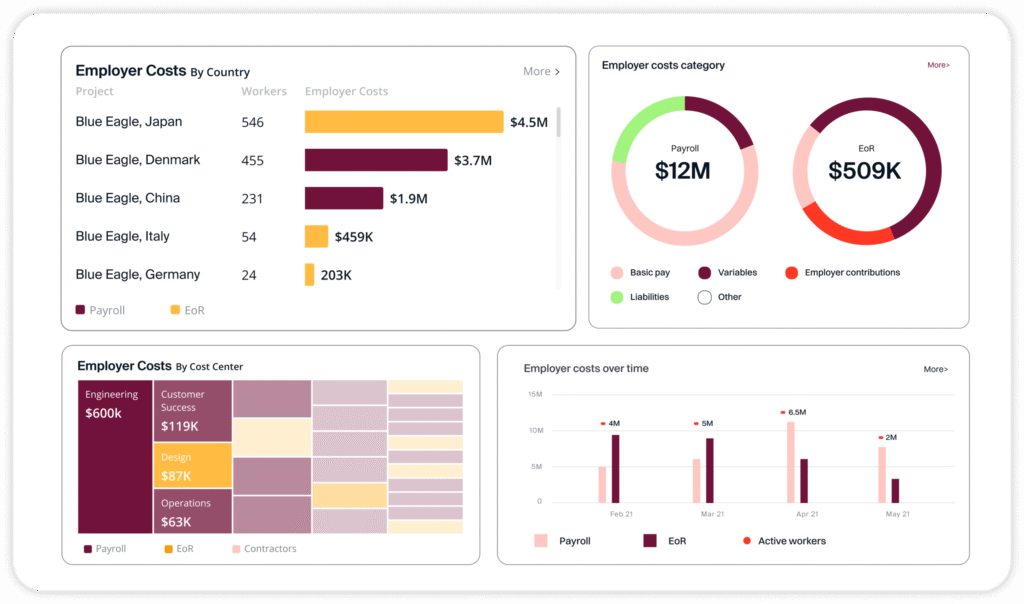
One of the strongest aspects of Papaya Global is its focus on payroll intelligence and reporting.
Instead of just processing payments, the platform gives companies a clearer understanding of their global workforce costs — something that becomes critical as teams expand across multiple countries.
Another standout point is compliance.
Handling payroll across different regions is usually where most businesses struggle, but Papaya approaches this with a structured system that reduces legal and financial risks. This makes it particularly valuable for companies that cannot afford compliance mistakes.
Also, the level of organization within the platform is noticeable.
Everything — from contracts to payments — is handled in a way that feels consistent and controlled, which is exactly what larger teams need.
What Felt Overrated
That said, not everything about Papaya Global lives up to expectations.
The first thing that stands out is complexity.
While the platform offers powerful features, it’s not always intuitive for new users. There’s a learning curve, and for smaller teams, this can feel unnecessary.
Pricing is another point that may not suit everyone.
Papaya delivers value — but only if you fully utilize its capabilities. Otherwise, it can feel like you’re paying for a system that is more advanced than what you actually need.
Finally, the onboarding experience can be slower compared to more self-service platforms.
Because of its structured approach, getting everything set up may take more time, which might not work well for companies that need to move fast.
Where Papaya Global Excels (Strengths)
While Papaya Global may not be the simplest tool on the market, it clearly stands out in certain areas — especially for companies operating at scale.
This is one of the key reasons why this Papaya Global review highlights its value for large and growing companies.
Global Payroll & Compliance
One of Papaya Global’s biggest strengths is its ability to handle payroll across multiple countries with a strong focus on compliance.
Instead of leaving companies to navigate different tax systems and legal requirements on their own, the platform provides a structured framework that reduces risk and ensures consistency. For businesses operating in several regions, this level of reliability is critical.
Advanced Reporting & Payroll Insights
Unlike many payroll tools that focus only on execution, Papaya goes deeper into financial visibility.
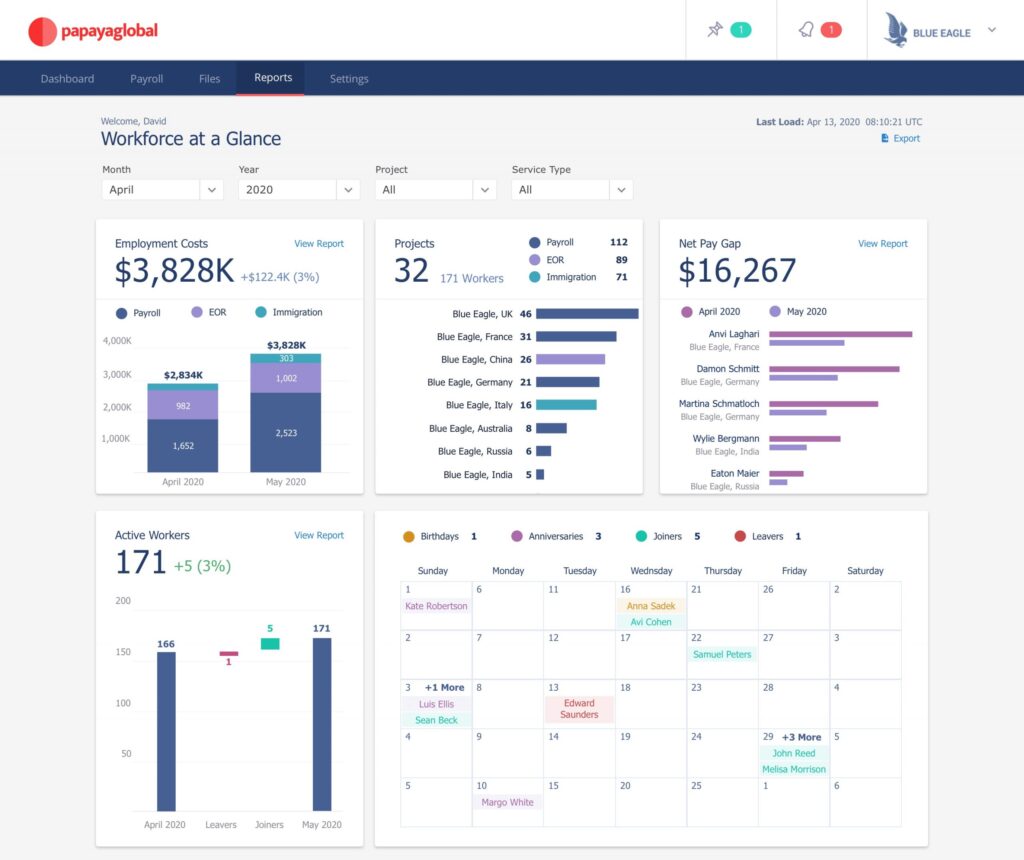
The platform offers detailed reporting that helps companies understand workforce costs across countries, departments, and roles. This is especially valuable for decision-makers who need more than just basic payroll processing.
Enterprise-Level Scalability
Papaya Global is clearly built with larger organizations in mind.
As teams expand internationally, complexity increases — but Papaya maintains a consistent system that scales with that growth. Whether managing multiple entities or coordinating payroll across regions, the platform is designed to handle such complexity.
Where Papaya Falls Short (Critical Downsides)
Despite its strengths, Papaya Global is not without limitations—and these downsides become more noticeable depending on your business’s size and needs.
Pricing vs Value
One of the most common concerns with Papaya Global is pricing.
While the platform offers advanced capabilities, the cost can feel high — especially for companies that don’t fully utilize its reporting and analytics features. In other words, you’re often paying for a comprehensive system, even if your needs are relatively simple.
For large organizations, this may be justified. But for smaller teams, the value-to-cost ratio is not always clear.
Not Beginner-Friendly
Papaya is not designed as a beginner-friendly platform.
Its structure, while powerful, can feel complex at first—especially for teams that are new to global payroll systems. There is a learning curve, and onboarding may require more time and guidance compared to simpler, self-service tools.
Slower Onboarding Process
Because of its structured and enterprise-focused approach, the onboarding process can take longer than expected.
Setting up payroll across multiple countries involves coordination, verification, and compliance checks — which Papaya handles thoroughly, but not necessarily quickly.
For companies that need to hire and start operations immediately, this can be a limitation.
When Papaya Global Is NOT Worth It
Even though Papaya Global is a powerful solution, it’s not always the right choice.
In fact, in some situations, using Papaya Global can be unnecessary—or even inefficient.
Solo Freelancers
If you’re working independently as a freelancer, Papaya Global is simply too much.
Most freelancers are looking for a straightforward way to receive payments, not a full-scale payroll and compliance system. In this case, the platform’s advanced features will likely go unused.
Small Startups with Limited Budget
For early-stage startups, cost and simplicity matter more than advanced reporting.
Papaya’s pricing and complexity can make it a less practical option for small teams that are just getting started. In many cases, simpler tools can handle the same needs more efficiently at this stage.
Companies That Only Need Payments
Not every business needs a complete workforce management system.
If your main goal is just to send or receive international payments, Papaya Global may feel like overkill. You would be using a highly structured system for a relatively simple task.
Papaya Global Pricing
Papaya Global offers a flexible pricing structure depending on the type of workforce and services required.
While exact pricing may vary by country and company size, here’s a general overview:
Contractor Management
- Starts around $30 per contractor/month
- Suitable for companies working with freelancers globally
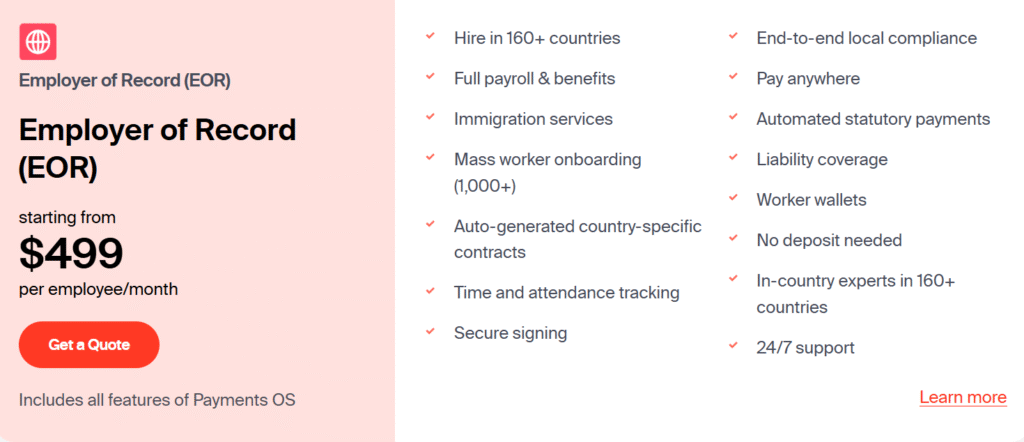
Employer of Record (EOR)
- Starts from $599 per employee/month
- Can increase depending on counthe try and complexity
Payroll Services
- Custom pricing based on:
- Number of employees
- Countries
- Compliance requirements
⚠️ Important Note
Papaya Global does not position itself as a low-cost solution.
👉 The pricing reflects:
- Compliance accuracy
- Enterprise-level reporting
- Global scalability
👉 In short:
You’re paying for control and visibility — not simplicity
Papaya Global vs Deel (Quick Comparison)
When comparing Papaya Global with Deel, the difference is not about which platform is “better” — but about how each one approaches global workforce management.
At a high level, both platforms solve the same problem: helping companies hire, pay, and manage international teams. But the way they do it is quite different.
The Core Difference
Deel focuses on speed and simplicity.
It’s designed for companies that want to hire quickly, manage contracts easily, and get started without dealing with complex systems.
Papaya Global, on the other hand, focuses on structure and financial visibility.
It’s built for organizations that need deeper control over payroll data, reporting, and global workforce costs.
When Deel Makes More Sense
Deel is often the better choice if:
- You need fast onboarding
- You prefer a self-service platform
- You’re running a startup or a growing team
- You want a more intuitive and flexible experience
If you want a simpler alternative, you can read my full Deel review here.
When Papaya Global Is the Better Fit
Papaya Global becomes the stronger option if:
- You’re managing a large or enterprise-level organization
- You need advanced payroll analytics and reporting
- You want detailed visibility into global workforce costs
- You’re prioritizing structure over speed
👉 If you want a full, side-by-side breakdown of both platforms, you can check my detailed comparison here:
(🔗Deel vs Papaya)
Who Should Use Papaya Global?
Papaya Global is not built for everyone — and that’s exactly what makes it effective for the right type of user.
The platform is best suited for companies that already operate at a certain level of scale and need more than just basic payroll processing.
Based on this Papaya Global review, the platform clearly targets companies that need structure and scalability.
Growing Companies Expanding Internationally
If your business is actively hiring across multiple countries, Papaya Global can provide the structure needed to manage that growth efficiently.
Instead of dealing with different tools and fragmented systems, you get a centralized platform that keeps everything organized and compliant.
Enterprises Managing Complex Workforce Operations
For large organizations, payroll is not just about payments — it’s about visibility, reporting, and financial control.
Papaya’s strength in analytics and structured reporting makes it a strong fit for companies that need deeper insights into their global workforce.
Businesses That Prioritize Compliance and Accuracy
If your company operates in regulated environments or cannot afford compliance errors, Papaya Global becomes particularly valuable.
Its structured approach reduces risk and ensures that payroll processes comply with local regulations in each country.
👉 In short, Papaya Global is best for companies that value control, accuracy, and long-term scalability — even if that comes with a bit more complexity.
💡 Quick Decision Guide
👉 If you want structured payroll and full compliance → Try Papaya Global
👉 If you prefer speed and simplicity → Check Deel
👉 If you only need payments → Papaya is not the best choice
Final Verdict: Is Papaya Global Worth It?
After analyzing Papaya Global, the answer is not a simple yes or no — it depends entirely on your business needs.
Papaya Global is a powerful, structured platform built for companies that operate at scale. Its strength lies in compliance, payroll accuracy, and advanced reporting — making it a strong choice for organizations that need deeper control over their global workforce.
However, that same level of structure can feel overwhelming for smaller teams or businesses with simpler needs. The pricing and complexity only make sense when you fully use the platform’s offerings.
👉 In short:
Papaya Global is not the simplest option — but it’s one of the most robust solutions available for managing global payroll at scale.
💡 Should You Try Papaya Global?
If your business is growing internationally and you need a reliable system to manage payroll, compliance, and workforce data in one place, Papaya Global is definitely worth exploring.
👉 Book a Demo with Papaya Global
🔁 Still Comparing Options?
If you’re not sure whether Papaya Global is the right fit, it’s worth comparing it with other platforms to see which best matches your specific needs.
👉 You can read my full comparison here: (🔗 Deel vs Papaya)
FAQ: Papaya Global Review
Is Papaya Global worth it?
Papaya Global is worth it for companies that need structured global payroll, compliance, and advanced reporting. However, it may not be ideal for small teams with simple needs.
Is Papaya Global expensive?
Papaya Global is generally considered a premium solution. Its pricing reflects its advanced features, which are better suited to growing and enterprise-level companies.
Who should use Papaya Global?
Papaya Global is best for companies managing international teams that need compliance, payroll accuracy, and detailed workforce insights.
Is Papaya better than Deel?
Papaya Global is better for analytics and enterprise-level control, while Deel is better for speed and simplicity. The right choice depends on your business needs.
Is this Papaya Global review based on real use cases?
Yes, this Papaya Global review is based on real-world analysis of features, pricing, and business use cases.

James B. has 8 years of experience in online business and digital publishing. At EarnGoGo, he researches and writes about HR, payroll, global employment, and employment compliance, focusing on how technology and AI are changing the way companies hire and manage international teams.