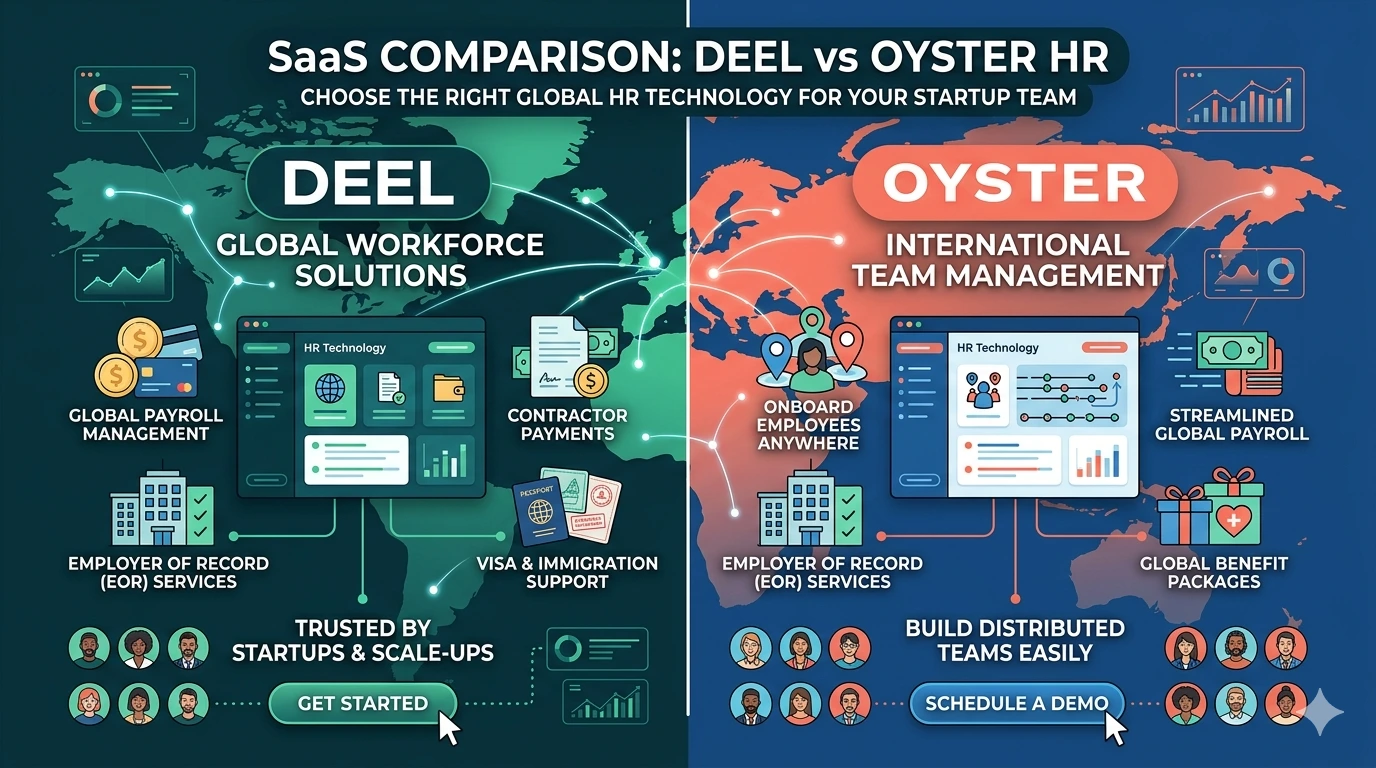
Hiring employees across multiple countries is no longer reserved for large enterprises, and platforms like Deel and Oyster have made global hiring more accessible than ever.
Today, startups and remote-first companies can build global teams faster than ever using Employer of Record (EOR) platforms such as Deel and Oyster.
However, choosing between Deel and Oyster isn’t always straightforward.
For many startups evaluating global expansion, the Deel vs Oyster debate often comes down to compliance, payroll flexibility, and long-term scalability.
Both platforms help companies hire international employees, manage payroll, stay compliant with local labor laws, and onboard talent without establishing legal entities in every country. Yet they differ in pricing, flexibility, country coverage, user experience, and contractor management capabilities.
In this Deel vs Oyster comparison, we’ll examine the key differences between both platforms, including payroll services, EOR functionality, compliance support, contractor management, pricing, and overall value for startups and growing businesses.
Quick verdict:
- Choose Deel if you need extensive global coverage, advanced contractor management, and a broader set of HR and payroll tools.
- Choose Oyster if your primary focus is remote hiring, employee onboarding, and a simplified EOR experience.
Let’s take a closer look at how these two global hiring platforms compare.
| Feature | Deel | Oyster |
|---|---|---|
| Best For | Global hiring & payroll | Remote-first hiring |
| Employer of Record (EOR) | ✅ | ✅ |
| Global Payroll | ✅ | ✅ |
| Contractor Management | ⭐ Advanced | ✅ Available |
| Compliance Support | ⭐ Extensive | ⭐ Strong |
| Employee Onboarding | ✅ | ✅ |
| HR Tools | ⭐ Extensive | Moderate |
| Countries Covered | 150+ | 180+ |
| Free Plan | Limited | ❌ No |
| Ideal Company Size | Startups to Enterprise | Startups & SMBs |
| Overall Rating | ⭐ 4.8/5 | ⭐ 4.6/5 |
What Is Deel?
Deel is a global hiring, payroll, and Employer of Record (EOR) platform that helps businesses hire, manage, and pay employees and contractors in more than 150 countries.
Founded in 2019, Deel has become one of the most recognized global employment platforms thanks to its extensive international coverage, payroll automation, compliance support, and contractor management tools.
Businesses use Deel to:
- Hire employees through Employer of Record (EOR) services.
- Manage and pay international contractors.
- Run global payroll across multiple countries.
- Handle localized employment contracts and compliance requirements.
- Automate HR and workforce management tasks.
One of Deel’s biggest strengths is its broad global infrastructure and extensive country coverage, making it a popular choice for startups, remote-first companies, and fast-growing international organizations.
For businesses planning rapid international expansion, Deel offers an all-in-one solution that combines hiring, payroll, compliance, and workforce management under a single platform.
What Is Oyster HR?
Oyster HR is a global employment platform focused on helping companies hire, pay, and manage remote talent across international markets.
The platform specializes in Employer of Record (EOR) services and global employment compliance, enabling businesses to onboard employees in countries where they do not have a legal entity.
Oyster helps companies
- Hire international employees through EOR services.
- Manage global payroll and employee benefits.
- Ensure compliance with local labor laws.
- Create compliant employment agreements.
- Support distributed and remote-first teams.
Oyster is particularly popular among remote-first startups and growing businesses that prioritize simplicity and ease of use when expanding internationally.
While its country coverage is smaller than Deel’s in some areas, Oyster focuses heavily on providing a streamlined hiring experience and strong compliance guidance for companies building global teams.
Deel vs Oyster: Pricing
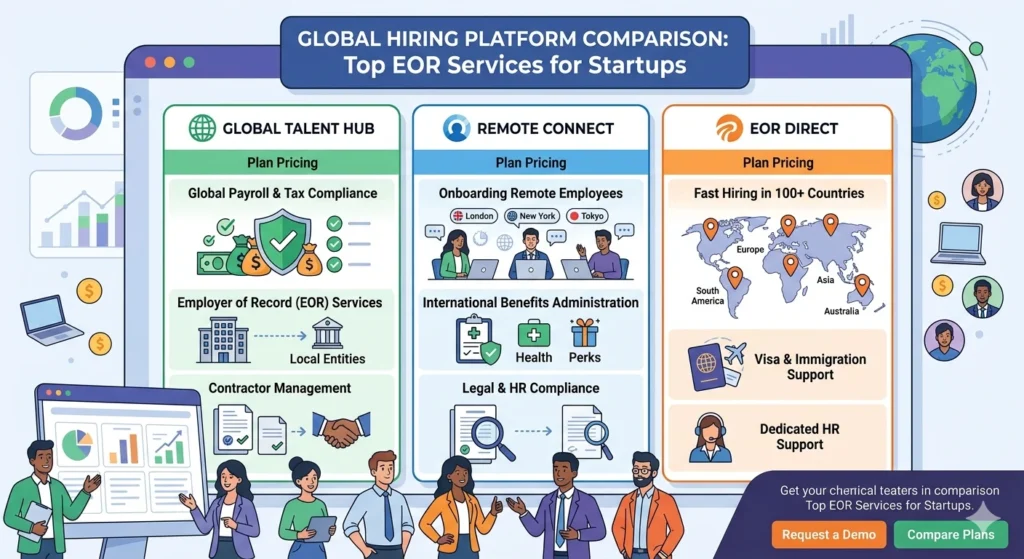
Pricing is often one of the first factors companies evaluate when comparing Deel and Oyster. While both platforms offer Employer of Record (EOR), contractor management, and global payroll services, their pricing structures can vary depending on the country, employment type, and additional services required.
Deel generally provides flexible pricing options for contractors, Employer of Record services, and global payroll. Companies can choose the specific services they need, making it easier to scale as their workforce grows.
Oyster follows a similar model, offering pricing based on the services used and the countries where employees are hired. The platform is often appreciated for its transparent pricing approach and straightforward onboarding process.
When comparing costs, businesses should look beyond the monthly subscription fee and consider factors such as:
- Employer of Record service fees.
- Contractor management costs.
- Payroll administration expenses.
- Compliance support.
- Employee benefits administration.
- Additional HR and workforce management tools.
For startups hiring only a few international employees, both platforms can provide a faster and more cost-effective alternative to establishing local legal entities.
However, companies planning large-scale international expansion may find that the overall value depends more on platform capabilities, compliance support, and operational efficiency than on the base subscription price alone.
Before making a final decision, it is recommended to request custom pricing from both providers based on your target countries, workforce size, and hiring plans.
Deel vs Oyster: Global Payroll
Managing payroll across multiple countries is one of the biggest challenges companies face when building international teams. Different tax regulations, reporting requirements, currencies, and employment laws can quickly create operational complexity.
Both Deel and Oyster offer global payroll solutions designed to simplify international workforce management while helping companies remain compliant with local regulations.
Deel provides a comprehensive global payroll platform that supports employees, contractors, and Employer of Record (EOR) workers across a large number of countries. The platform centralizes payroll operations, automates calculations, and helps businesses manage payments through a single dashboard.
Key payroll capabilities offered by Deel include:
- Multi-country payroll management.
- Automated payroll calculations.
- Local tax and compliance support.
- Contractor and employee payments.
- Centralized payroll reporting.
- Payroll administration across global teams.
Oyster also offers global payroll services focused on helping distributed companies manage international employees and maintain compliance across multiple jurisdictions.
Oyster’s payroll features include:
- International payroll processing.
- Employee payment management.
- Compliance-focused payroll administration.
- Benefits and employment support.
- Global workforce reporting.
For businesses managing complex international operations, Deel may provide greater flexibility due to its broader ecosystem of payroll, HR, contractor, and compliance tools.
However, Oyster remains a strong option for remote-first companies seeking a streamlined payroll experience combined with Employer of Record services.
Ultimately, both platforms help reduce the administrative burden of global payroll, but the best choice depends on the size of your workforce, the countries involved, and the level of payroll complexity your business needs to manage.
Deel vs Oyster: Employer of Record (EOR)
Employer of Record (EOR) services are one of the primary reasons businesses compare Deel and Oyster. An EOR allows companies to hire employees in foreign countries without establishing a local legal entity, making international expansion significantly faster and less complex.
Both Deel and Oyster offer Employer of Record solutions that handle employment contracts, payroll administration, tax compliance, benefits management, and local labor law requirements.
Deel’s EOR platform enables businesses to hire employees in more than 150 countries while managing the entire employment lifecycle through a centralized system. Companies can onboard talent quickly while reducing the administrative burden associated with international hiring.
Key EOR advantages offered by Deel include the following:
- Extensive global coverage.
- Fast employee onboarding.
- Integrated payroll and HR management.
- Local compliance expertise.
- Contractor-to-employee conversion support.
Oyster also provides a strong EOR solution designed for remote-first organizations that want to hire international employees without creating local entities. The platform focuses on simplifying global employment while maintaining compliance with local regulations.
Key EOR advantages offered by Oyster include the following:
- Simplified global hiring workflows.
- Compliance-focused onboarding.
- Employee benefits administration.
- Local employment support.
- User-friendly hiring experience.
For startups entering multiple international markets, Deel may offer greater flexibility due to its broader infrastructure and workforce management capabilities.
However, Oyster remains an attractive option for businesses prioritizing simplicity, ease of use, and a streamlined remote hiring experience.
Ultimately, both providers can help companies expand internationally without establishing local entities, but the best choice depends on hiring volume, geographic expansion plans, and operational requirements.
Deel vs Oyster: Contractor Management
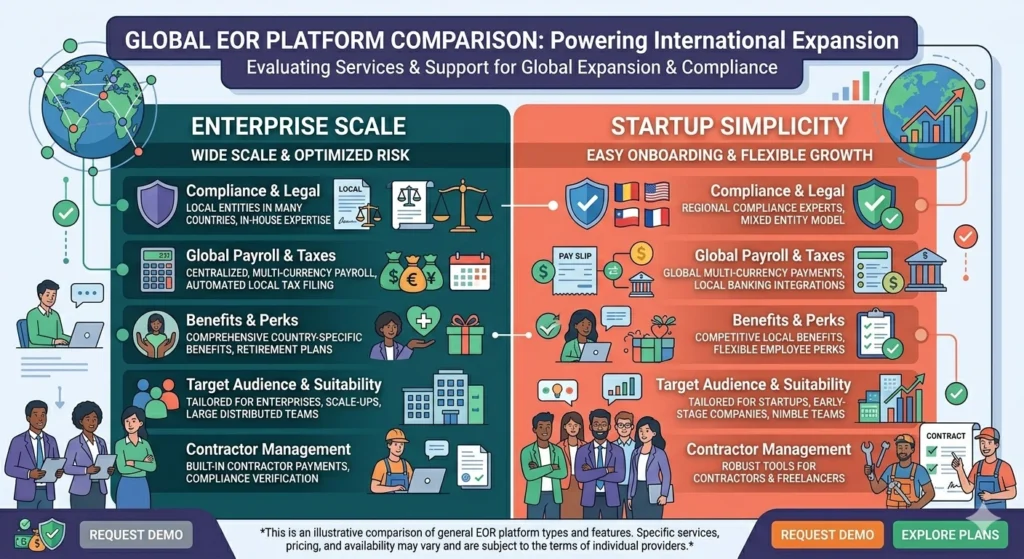
Many companies start their global expansion by hiring independent contractors before transitioning to full-time employees. As a result, contractor management has become a critical feature when evaluating platforms such as Deel and Oyster.
Deel is widely recognized for its contractor management capabilities. The platform allows businesses to onboard, manage, and pay contractors across multiple countries while helping reduce compliance risks associated with international contractor relationships.
Key contractor management features offered by Deel include the following:
- International contractor onboarding.
- Localized contractor agreements.
- Automated invoicing and payments.
- Multiple withdrawal methods.
- Contractor compliance support.
- Contractor-to-employee conversion options.
These features make Deel particularly attractive for startups and fast-growing companies that rely heavily on freelancers, consultants, and remote contractors.
Oyster also supports contractor management, enabling businesses to engage and pay international contractors through a centralized platform. Companies can manage contracts, payments, and workforce records while maintaining visibility across their global teams.
Key contractor management features offered by Oyster include the following:
- Global contractor hiring.
- International payments.
- Contract management.
- Workforce administration tools.
- Compliance-focused workflows.
While both platforms provide contractor management functionality, Deel is often considered the stronger option for businesses with large contractor workforces due to its broader set of contractor-specific tools and payment flexibility.
For organizations that primarily hire employees through Employer of Record services, Oyster’s contractor features may still be more than sufficient for day-to-day operations.
Deel vs Oyster: Compliance & Legal Support
Compliance is one of the most important considerations when hiring employees or contractors internationally. Employment laws, tax regulations, worker classification rules, and reporting requirements vary significantly from one country to another, making compliance a major challenge for global businesses.
Both Deel and Oyster are designed to help companies reduce compliance risks while expanding internationally. Their platforms provide access to local expertise, compliant employment agreements, payroll support, and country-specific guidance.
Deel places a strong emphasis on compliance throughout the employee lifecycle. Businesses can access localized contracts, regulatory guidance, and workforce management tools designed to help them stay compliant across multiple jurisdictions.
Key compliance features offered by Deel include:
- Localized employment agreements.
- Contractor classification support.
- Country-specific compliance guidance.
- Payroll and tax compliance assistance.
- Ongoing regulatory updates.
Oyster also focuses heavily on compliance and legal support, particularly for companies hiring remote employees through Employer of Record services. The platform helps businesses navigate local employment requirements while reducing administrative complexity.
Key compliance features offered by Oyster include:
- Local labor law compliance support.
- Country-specific employment guidance.
- Compliant onboarding workflows.
- Benefits and employment administration.
- Global employment documentation.
For startups and growing businesses entering unfamiliar markets, both platforms can significantly reduce legal and compliance risks compared to managing international hiring independently.
Ultimately, companies should evaluate the countries they plan to hire in, the complexity of their workforce, and their internal compliance resources when deciding which platform provides the best long-term fit.
Companies hiring internationally should also understand country-specific compliance requirements. For example, businesses planning to hire employees in Algeria must navigate local labor laws, payroll obligations, and employment regulations.
Deel vs Oyster: User Experience
User experience plays a major role when selecting a global hiring platform, especially for startups and growing businesses that need to onboard employees quickly and manage international operations efficiently.
Both Deel and Oyster offer modern, cloud-based platforms designed to simplify global hiring, payroll, and workforce management. However, their approaches differ slightly.
Deel provides a feature-rich platform that combines payroll, Employer of Record services, contractor management, compliance tools, and HR functionality within a single ecosystem. While the platform offers extensive capabilities, new users may need some time to explore all available features.
Key user experience strengths of Deel include the following:
- Centralized workforce management.
- Comprehensive payroll dashboard.
- Flexible contractor management tools.
- Advanced reporting capabilities.
- Broad functionality for scaling businesses.
Oyster focuses on simplicity and ease of use. The platform is designed to help businesses hire and manage international employees with minimal complexity, making it particularly attractive to remote-first teams and startups.
Key user experience strengths of Oyster include:
- Clean and intuitive interface.
- Simplified onboarding workflows.
- Easy navigation.
- Strong employee-focused experience.
- Streamlined global hiring process.
For businesses that prioritize extensive functionality and scalability, Deel may offer greater long-term flexibility. Companies looking for a simpler experience with a strong focus on remote hiring may prefer Oyster’s streamlined approach.
Ultimately, both platforms provide user-friendly experiences, and the best choice often depends on the size, complexity, and growth stage of the business.
Pros and Cons of Deel
In the Deel vs Oyster comparison, Deel stands out for its extensive global infrastructure and contractor management features.
Pros
- Extensive global coverage across more than 150 countries.
- Strong Employer of Record (EOR) services.
- Advanced contractor management capabilities.
- Comprehensive global payroll platform.
- Wide range of HR and workforce management tools.
- Strong compliance and legal support.
- Suitable for startups, scaleups, and enterprise organizations.
Cons
- The advanced feature set may feel overwhelming for some new users.
- Pricing can vary depending on services and countries involved.
- Businesses with simple hiring needs may not require all available functionality.
Pros and Cons of Oyster
When evaluating Deel vs Oyster, Oyster appeals to companies looking for a simpler remote hiring experience.
Pros
- Simple and user-friendly interface.
- Strong focus on remote and distributed teams.
- Effective Employer of Record (EOR) services.
- Compliance-focused hiring workflows.
- Streamlined onboarding experience.
- Well-suited for startups and remote-first companies.
Cons
- Fewer workforce management features compared to Deel.
- Less flexibility for businesses with complex global operations.
- Some companies may outgrow the platform as international hiring requirements become more sophisticated.
Who Should Choose Deel?
Deel is generally the better choice for companies that need a comprehensive global workforce platform capable of supporting rapid international expansion.
You should consider Deel if:
- You hire both employees and contractors internationally.
- You need advanced contractor management tools.
- You plan to expand into multiple countries.
- You require global payroll and workforce management in one platform.
- You want a scalable solution that can grow with your business.
- You need extensive compliance support across various jurisdictions.
For startups planning aggressive international growth, Deel’s broader ecosystem and workforce management capabilities may provide a significant long-term advantage.
Who Should Choose Oyster?
Oyster may be the better option for companies that prioritize simplicity, ease of use, and remote-first hiring workflows.
You should consider Oyster if:
- You primarily hire remote employees.
- You’re looking for a straightforward Employer of Record (EOR) solution.
- You prefer a simple and intuitive user experience.
- You have a relatively small or mid-sized distributed team.
- Your international hiring needs are less complex.
- You value streamlined onboarding and compliance support.
For remote-first startups focused on hiring international employees without the need to build complex HR operations, Oyster can be an effective and easy-to-manage solution.
Companies that prioritize simplicity and remote-first hiring may find Oyster to be a strong alternative worth exploring. Try Oyster HR
Final Verdict
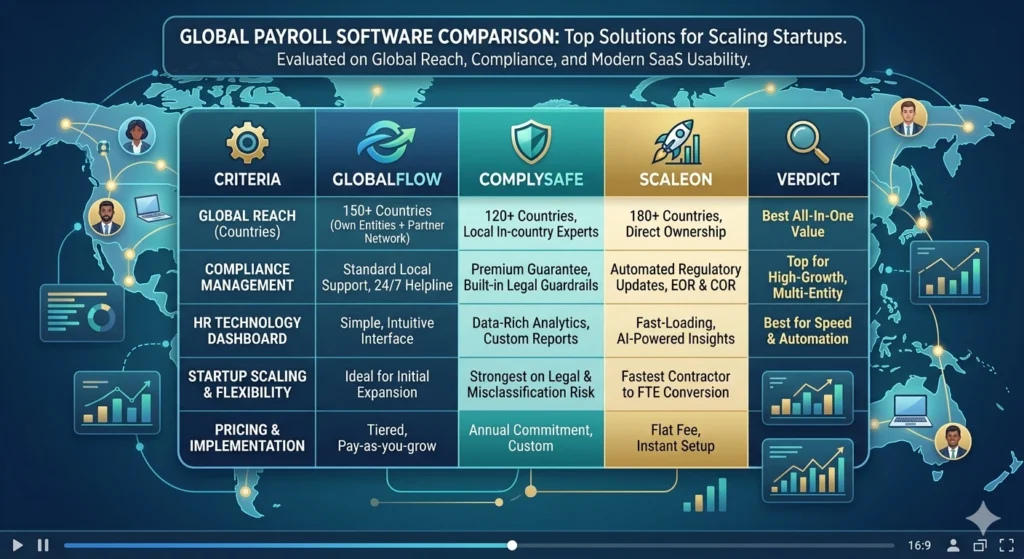
Both Deel and Oyster are strong global hiring platforms that help companies hire, manage, and pay international employees while maintaining compliance across multiple countries.
Oyster stands out for its simplicity, user-friendly interface, and remote-first hiring experience. It is a solid option for startups and distributed teams looking for a straightforward Employer of Record (EOR) solution.
However, Deel offers a broader range of capabilities, including advanced contractor management, global payroll, workforce management tools, and extensive international coverage. Its flexibility makes it a strong choice for companies planning long-term global expansion.
If your primary goal is simple international hiring, Oyster is certainly worth considering.
But for businesses that need a scalable platform capable of supporting employees, contractors, payroll, compliance, and international growth from a single system, Deel is our recommended choice.
Winner: Deel 🏆
If you’re still evaluating other global hiring platforms, you may also want to read our detailed Deel vs Papaya Global comparison before making a final decision.
Get Started with Deel
If you’re looking for a platform that simplifies global hiring, payroll, compliance, and contractor management, Deel remains one of the strongest solutions available today.
Whether you’re hiring your first international employee or building a distributed team across multiple countries, Deel can help you expand globally without the complexity of establishing local entities.
👉 Explore Deel and see how it can support your international growth strategy.
Frequently Asked Questions
Below are some of the most common questions about Deel vs Oyster.
Is Deel better than Oyster?
Both platforms are strong choices for global hiring. Deel generally offers more advanced workforce management, payroll, and contractor tools, while Oyster focuses on simplicity and remote-first hiring.
Which platform is better for startups?
Both can work well for startups. Oyster is often preferred for simplicity, while Deel may be better for companies planning rapid international expansion.
Does Deel support global payroll?
Yes. Deel provides global payroll solutions that help businesses manage employees and contractors across multiple countries from a centralized platform.
Does Oyster offer Employer of Record services?
Yes. Oyster provides Employer of Record (EOR) services that allow companies to hire employees internationally without establishing local legal entities.
Can I hire contractors with Deel and Oyster?
Yes. Both platforms support international contractor management, although Deel offers a broader range of contractor-focused tools.
Which platform is better for international expansion?
For companies planning large-scale global growth, Deel is often considered the stronger option due to its extensive country coverage and workforce management capabilities.

James B. has 8 years of experience in online business and digital publishing. At EarnGoGo, he researches and writes about HR, payroll, global employment, and employment compliance, focusing on how technology and AI are changing the way companies hire and manage international teams.